

Why Industrial Real Estate is the Backbone of Modern Commerce
Commercial real estate industrial properties are specialized buildings for the production, storage, assembly, and distribution of goods. Unlike office or retail spaces, these properties prioritize function over form. Their value comes from operational efficiency, with features like high ceilings (10+ feet), reinforced floors, multiple loading docks, and minimal office space (under 20%). Industrial real estate is one of the four major commercial property types—alongside office, multifamily, and retail—and has become a top-performing asset class due to e-commerce growth and stable, long-term demand.
Key Facts About Industrial Real Estate:
- Primary Function: Manufacturing, warehousing, distribution, and logistics
- Typical Size: 10,000 to over 1 million square feet
- Main Categories: Manufacturing, storage/distribution, and flex space
- Lease Terms: Typically long-term (often triple-net), providing stable income
- Market Drivers: E-commerce, supply chain reshoring, and last-mile delivery
- Current Market: Stabilizing after rapid growth, with vacancy rates around 6%.
Nearly every consumer product passes through an industrial building, making this sector the backbone of modern commerce.
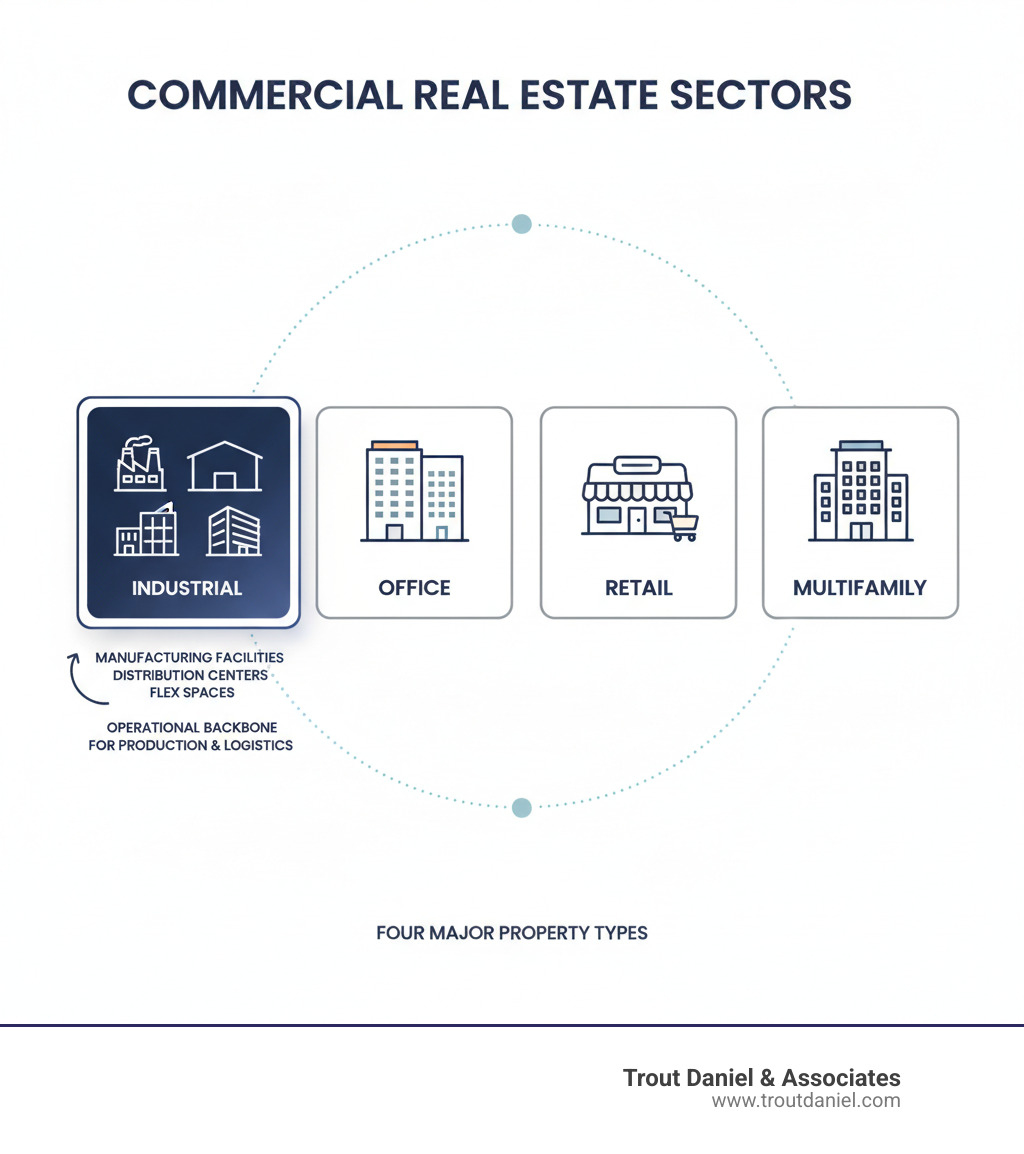
What is Industrial Real Estate and How Does it Differ from Other Commercial Real Estate?
At Trout Daniel & Associates, we understand that industrial properties are a unique segment of commercial real estate. While an office building houses a startup and a retail space sells its products, an industrial property is where those products are made, stored, and shipped. This focus on behind-the-scenes operations means industrial buildings are defined by their utility—strong floors, high ceilings, and seamless logistics—rather than public-facing aesthetics. Understanding these distinctions is crucial for investors and businesses alike. For more insights into other sectors, you can explore our office property services and retail property services.
The Main Categories and Types of Industrial Buildings
Industrial properties are not one-size-fits-all; they are as varied as the businesses they house. At Trout Daniel & Associates, we categorize commercial real estate industrial properties into three main groups: manufacturing facilities, storage and distribution buildings, and flex space.
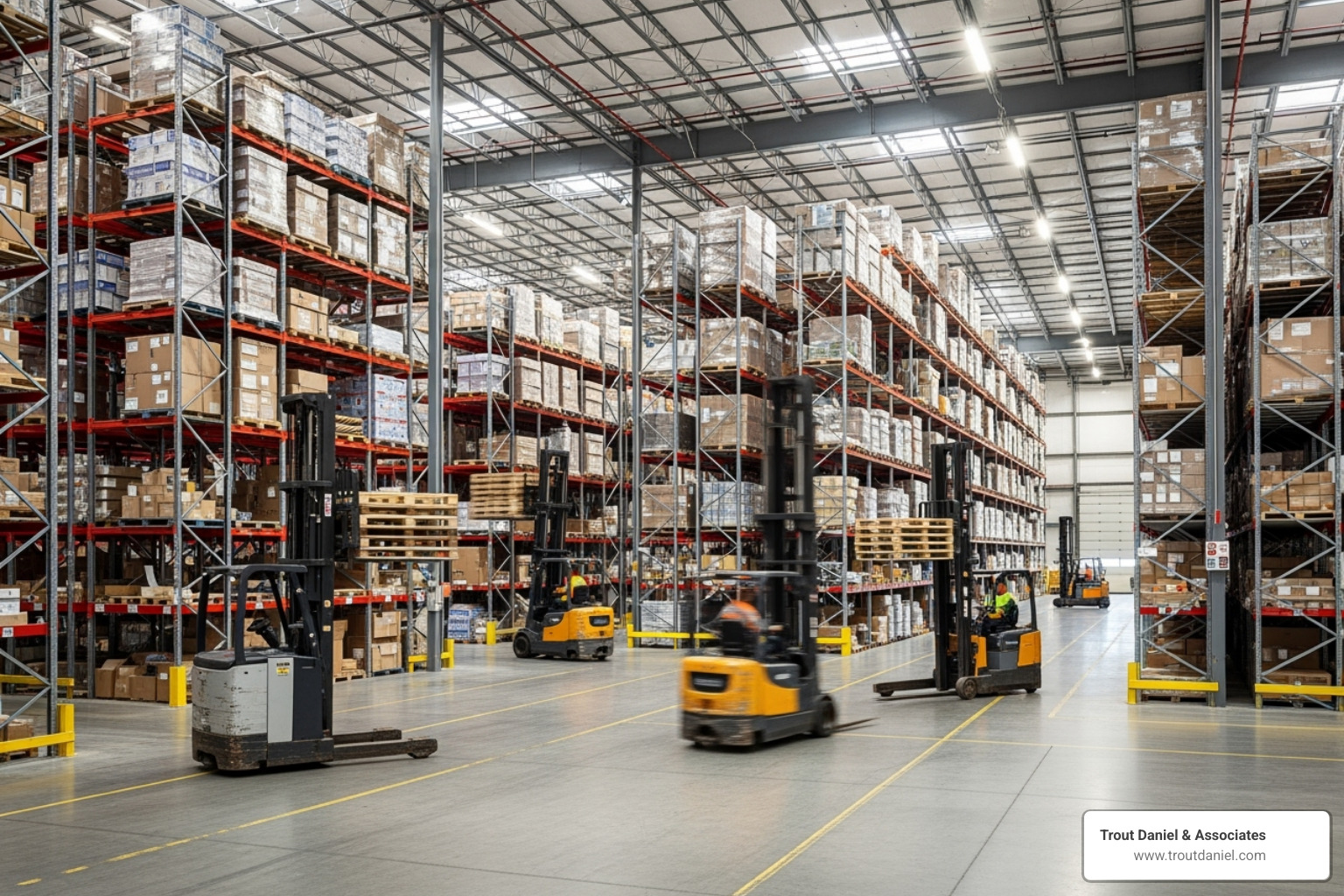
Key specifications differentiate these buildings, including the percentage of office space, clear height (vertical space), power requirements, and the number of loading docks. These features determine which businesses can operate there successfully.
Manufacturing Facilities
These buildings are designed for production, dedicating less than 20% of their space to offices. Heavy manufacturing facilities (e.g., steel mills, chemical plants) require robust infrastructure like reinforced floors, heavy three-phase power, and specialized HVAC systems, making them difficult to repurpose. Light assembly facilities are more flexible, housing operations like electronics assembly or food packaging with lighter, more portable equipment and less demanding structural needs.
Whether you’re running a massive factory or a nimble assembly operation, finding the right space is critical. More info about our industrial property services.
Storage and Distribution Buildings
The rise of e-commerce has made these properties the backbone of modern logistics. Distribution warehouses are massive facilities (50,000 to over 1 million sq. ft.) built for speed, featuring high clear heights (30+ feet) for vertical storage and dozens of dock doors for rapid truck turnaround. Location near highways and population centers is key. General warehouses focus on longer-term storage of inventory or materials and are often located in more economical areas. Truck terminals (cross-dock facilities) are pure transfer points, with a high ratio of dock doors to square footage, designed to move goods from one truck to another with minimal storage time.
If you’re interested in storage solutions from a different angle, you might also want to explore More info about our self-storage property services.
Flex Space
Flex space is the most versatile category, blurring the lines between industrial, office, and even retail use. These properties have a higher percentage of office space (often 30% or more) combined with warehouse or production areas.
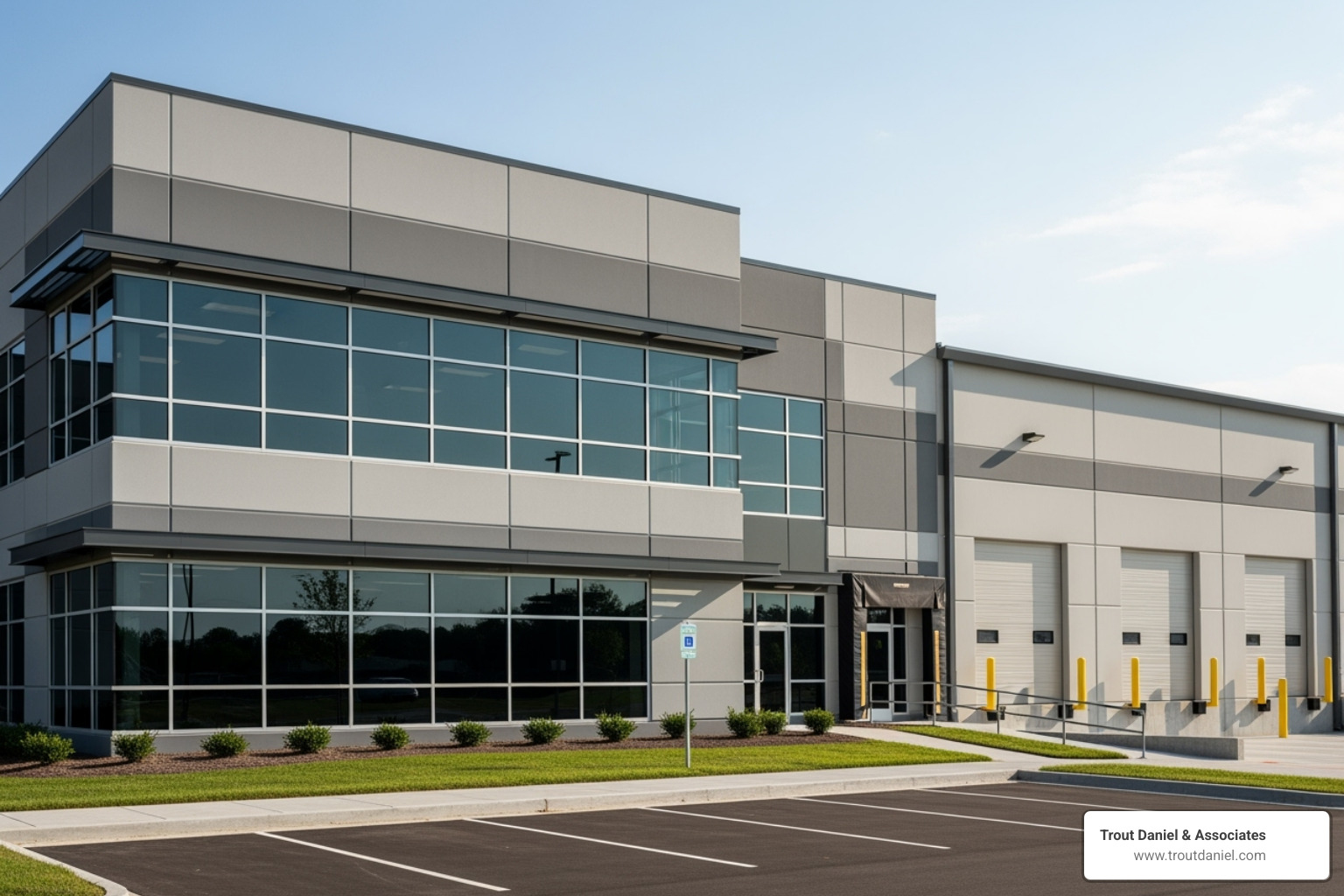
Research & Development (R&D) facilities combine labs and light manufacturing areas with offices for scientists and engineers. Data centers are highly specialized buildings that house computer servers, requiring enormous power, cooling, and security to support our digital world. Showrooms merge retail display space with offices and warehouse areas for inventory and fulfillment, such as a furniture store or car dealership. Flex properties are ideal for businesses that need both a professional presence and back-end operations under one roof.
Understanding the Commercial Real Estate Industrial Market
The commercial real estate industrial market, once a quiet sector, became a hot investment area due to the e-commerce boom. While the frenetic pace of the pandemic years has passed, the market is now maturing and stabilizing on strong fundamentals. Demand for efficient logistics and last-mile delivery continues, but the sector is experiencing a more sustainable, healthy growth trajectory.
Rent increases have moderated, and new construction has slowed as developers have become more cautious. National vacancy rates have hovered around 6.0% since late 2023, which is still below pre-pandemic averages, indicating a balanced and maturing market rather than a declining one.
Current Market Trends and Dynamics
Several powerful forces are reshaping the industrial landscape:
- Reshoring and Onshoring: Prompted by global supply chain disruptions, companies are bringing manufacturing closer to home. This is creating significant demand for production-ready space, with projections showing a potential 6-13% expansion of U.S. manufacturing space by 2034, according to Manufacturing growth insights from NAIOP.
- AI and Proptech Integration: The rapid adoption of AI is driving explosive demand for data centers. Beyond that, technology is being used to optimize supply chains, manage inventory, and predict maintenance needs, making industrial properties smarter and more efficient.
- Labor Availability: Access to a skilled workforce has become a critical factor in site selection. Markets with established labor pools are at a significant advantage, especially for logistics and distribution operations.
- Higher Interest Rates and Costs: The current macroeconomic environment has cooled speculative development. According to Moody’s analysis on rent growth, rent growth has slowed to 0.3% quarterly, reflecting a more measured market.
Emerging and Specialized Industrial Properties
The industrial sector continues to evolve with new and growing property types:
- Industrial Outdoor Storage (IOS): This refers to land zoned for storing vehicle fleets, construction materials, or shipping containers. It has become critical infrastructure, especially in dense urban areas.
- Cold Storage Facilities: These sophisticated, temperature-controlled warehouses are in high demand due to growth in agriculture, healthcare (pharmaceuticals), and food delivery services. Their complexity and high energy needs make them a specialized but potentially strong long-term investment.
- Data Centers: As one of the fastest-growing segments, these facilities house the servers powering the internet, cloud computing, and AI. The surge in AI adoption is accelerating the need for these power-hungry, high-security digital fortresses.
Industrial Property Classifications: A, B, and C
Like other commercial real estate, industrial properties are classified as Class A, B, or C. These classifications provide a quick snapshot of a property’s quality, location, and potential value, helping investors and tenants make informed decisions.
| Feature | Class A Industrial | Class B Industrial | Class C Industrial |
|---|---|---|---|
| Age & Condition | New construction (within 10-15 years) or recently renovated; high-quality finishes; modern amenities. | Older (15-30 years) but well-maintained; functional; some modern updates. | Older (30+ years); often in need of significant upgrades or renovations; functional but dated. |
| Location | Prime, highly desirable locations; excellent access to major highways, ports, or logistics hubs; high visibility. | Good locations; decent access to transportation; often in established industrial parks. | Less desirable locations; poorer access; older industrial areas; sometimes in transition zones. |
| Features | High clear heights (28ft+); ample loading docks; large truck courts; advanced technology infrastructure; energy-efficient systems; attractive office components. | Moderate clear heights (18-24ft); adequate loading docks; functional layouts; standard power and HVAC. | Lower clear heights (under 18ft); limited loading docks; less efficient layouts; basic utilities; minimal office space. |
| Tenant Quality | Large, creditworthy national or international corporations; e-commerce giants; high-growth logistics companies. | Mid-sized companies; regional distributors; light manufacturers; companies seeking affordability. | Smaller, local businesses; startups; those with specialized needs willing to undertake renovations; higher tenant turnover risk. |
| Rental Rates | Highest rents in the market; premium pricing. | Moderate rents; competitive pricing; good value. | Lowest rents; often below market without upgrades; higher vacancy risk. |
| Investment Risk | Lower risk due to strong tenant demand and stability; often yield lower cap rates but stable income. | Moderate risk; reliable income, but may require some capital expenditure for upgrades. | Higher risk; potential for higher returns if repositioned, but requires substantial investment and active management. |
Investing in Industrial Real Estate
Once overshadowed by office and retail, commercial real estate industrial properties have become one of the most compelling investment opportunities available. The rise of e-commerce and the need for resilient supply chains transformed this sector, highlighting its stability and growth potential. The fundamental need to produce, store, and ship goods gives industrial properties some of the most recession-proof values in commercial real estate.
Industrial tenants typically sign long-term leases (5-10+ years), providing predictable income streams that are highly attractive to investors seeking reliable cash flow. At Trout Daniel & Associates, we’ve guided countless investors through this sector’s opportunities. Explore how we can support your strategy at More info about our investment services.
Pros and Cons of Investing in Commercial Real Estate Industrial Assets
Like any investment, industrial real estate has both advantages and potential drawbacks.
| PROS | CONS: |
|---|---|
|
|
|
|
|
|
|
|
The Critical Role of Location and Zoning
In commercial real estate industrial, location and zoning are paramount. The right location determines property value, operational efficiency, and tenant demand.
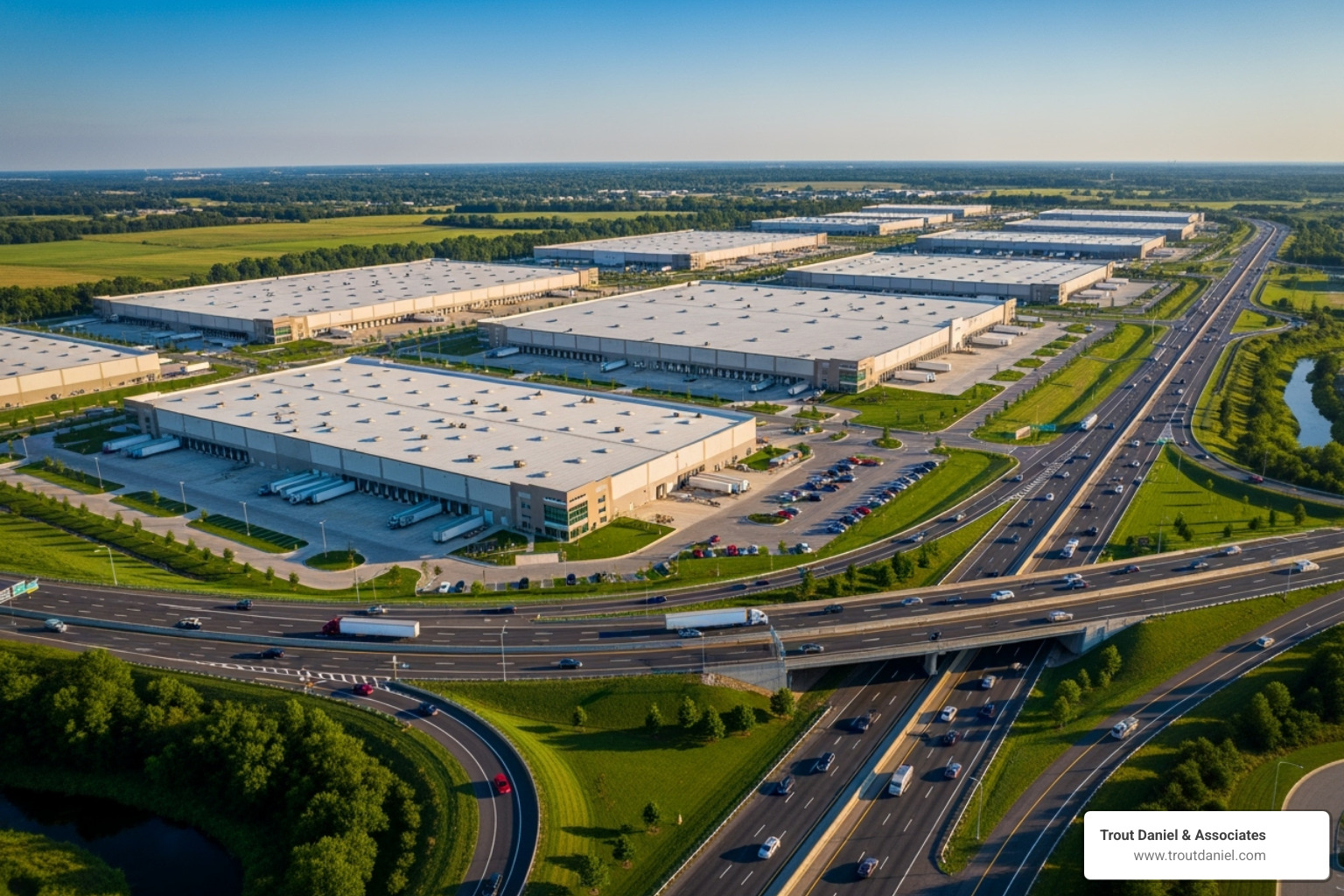
Location value is driven by proximity to transportation networks (ports, highways, rail), access to a reliable labor pool, and closeness to consumer markets for last-mile delivery. Every minute saved in transit translates to operational savings, making properties with superior access command premium prices.
Zoning regulations dictate how land can be used, creating a legal framework to manage noise, traffic, and environmental impacts. Industrial zoning specifies permitted uses (e.g., manufacturing, warehousing), lot sizes, and building codes. Before investing, you must verify that your intended use is permitted. Navigating the intersection of location and zoning requires local expertise, which is essential for ensuring your investment is built on solid ground.
Frequently Asked Questions about Industrial Real Estate
We’ve been in the commercial real estate industrial business for decades, and certain questions come up time and again. Here are concise answers to some of the most common inquiries we receive from clients.
Is industrial real estate a good investment in the current market?
Yes, we believe it remains a strong investment, though the market has matured from its pandemic-era frenzy. The fundamentals are solid: e-commerce continues to grow, reshoring is boosting domestic manufacturing, and AI is creating huge demand for data centers. Rent growth has stabilized to a more sustainable pace (around 0.3% quarterly, per Moody’s analysis on rent growth), and vacancy rates remain below pre-pandemic levels. For investors who perform proper due diligence, the risk-reward profile remains favorable, especially for well-located, modern properties.
What is driving the high demand for industrial properties?
Demand is driven by several powerful, long-term economic shifts:
- E-commerce Fulfillment: The need for a dense network of warehouses to meet consumer expectations for fast delivery.
- Supply Chain Optimization: Companies are building more resilient logistics networks, increasing demand for distribution centers and truck terminals.
- Manufacturing Growth & Reshoring: A trend of bringing production back to North America is creating new demand for manufacturing facilities, as noted in Manufacturing growth insights from NAIOP.
- Specialized Spaces: Technological changes are fueling demand for data centers (for AI and cloud computing) and cold storage facilities (for food and pharmaceuticals).
How difficult is it to find tenants for industrial buildings?
It depends on the property and the market. Tenant demand is strong overall, but success hinges on several factors. Location is the most critical element; properties with good access to transportation and labor lease faster. Property class and features also matter, as modern Class A facilities attract the most creditworthy tenants. Older Class B or C properties may require more marketing and competitive terms.
While long lease terms provide stability, they can also mean longer vacancy periods between tenants as businesses take their time finding the right long-term fit. A general-purpose warehouse will typically lease more easily than a highly specialized facility with a smaller pool of potential users.
Your Partner in Industrial Real Estate
The world of commercial real estate industrial is dynamic and essential to our modern economy. From massive distribution centers to specialized flex spaces, this sector offers tremendous opportunities for businesses and investors alike. Success, however, requires specialized knowledge to steer the unique technical specifications, location factors, and evolving market trends.
At Trout Daniel & Associates, we’ve been helping clients master the complexities of commercial real estate since 1987. We understand that industrial transactions require a different approach, focusing on details like clear heights, power requirements, and supply chain logistics.
What sets us apart is our commitment to boutique, personalized service. You’ll work directly with experienced professionals who take the time to understand your specific goals. We’re not just brokers—we’re partners in your success, providing the strategic guidance you need to make confident decisions.
Ready to explore the potential of industrial real estate? Whether you’re expanding your operations or diversifying your portfolio, we’re here to help you open up opportunities in this vital market. Explore our comprehensive CRE services and find how Trout Daniel & Associates can be your trusted partner.